Project case study
About the project
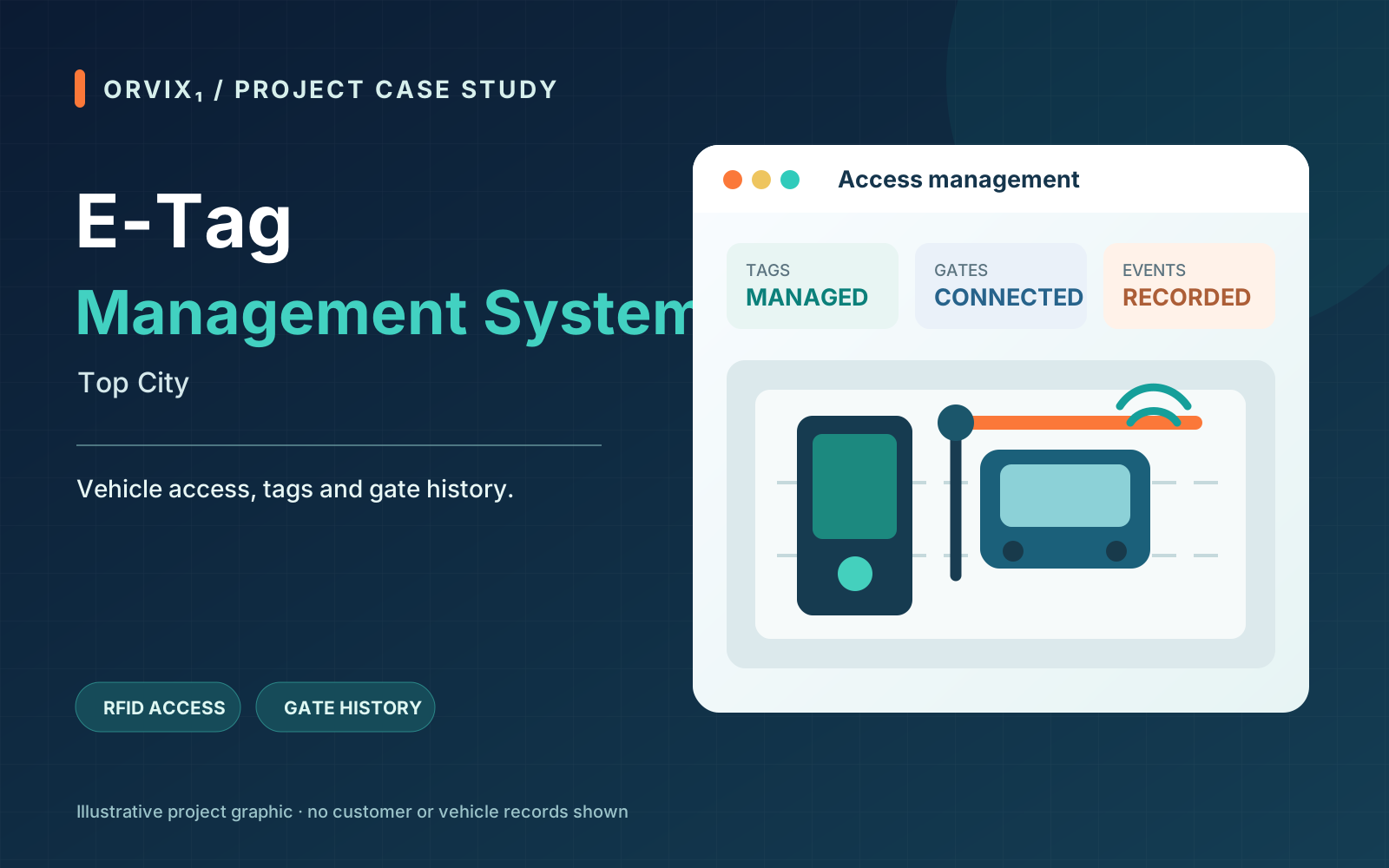
ORVIX₁ implemented an E-Tag management system for Top City. The solution connects vehicle and owner registration, RFID tag assignment, gate access decisions, and entry and exit records in one operational workflow. Staff use a browser-based management application to maintain records and review activity, while gate computers handle tag scans and barrier actions.
The system is built for daily access control, where a gate must make a quick decision and the management team still needs a reliable record of what happened. Each assigned tag is linked to a vehicle and its owner. Authorized staff can review the assignment, change its access status, and examine gate activity without working directly on the gate computer.
The operational challenge
Managing residential vehicle access involves more than registering a tag number. A replacement tag must stay linked to the correct vehicle, blocked access must take effect at the gate, and entry and exit events must remain available for review. Connectivity can also be interrupted; a gate cannot depend on a constant internet connection to process every scan.
Top City needed a connected management and gate workflow that keeps vehicle details, tag status, and access history aligned while allowing the gate to continue operating during a connection outage.
How the system works
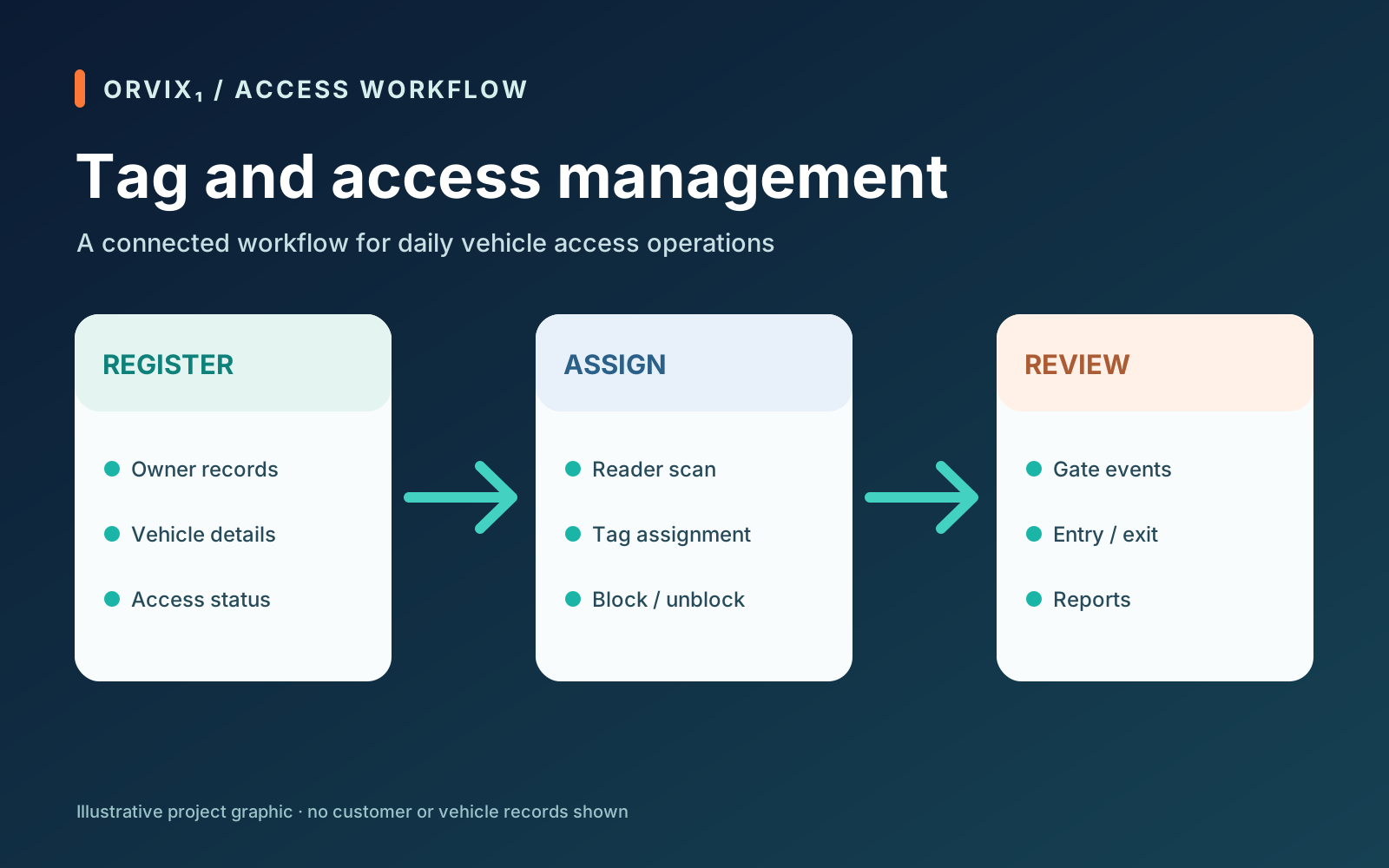
- Register and assign. Staff maintain owner and vehicle records and assign an RFID E-Tag through the management application and reader workflow.
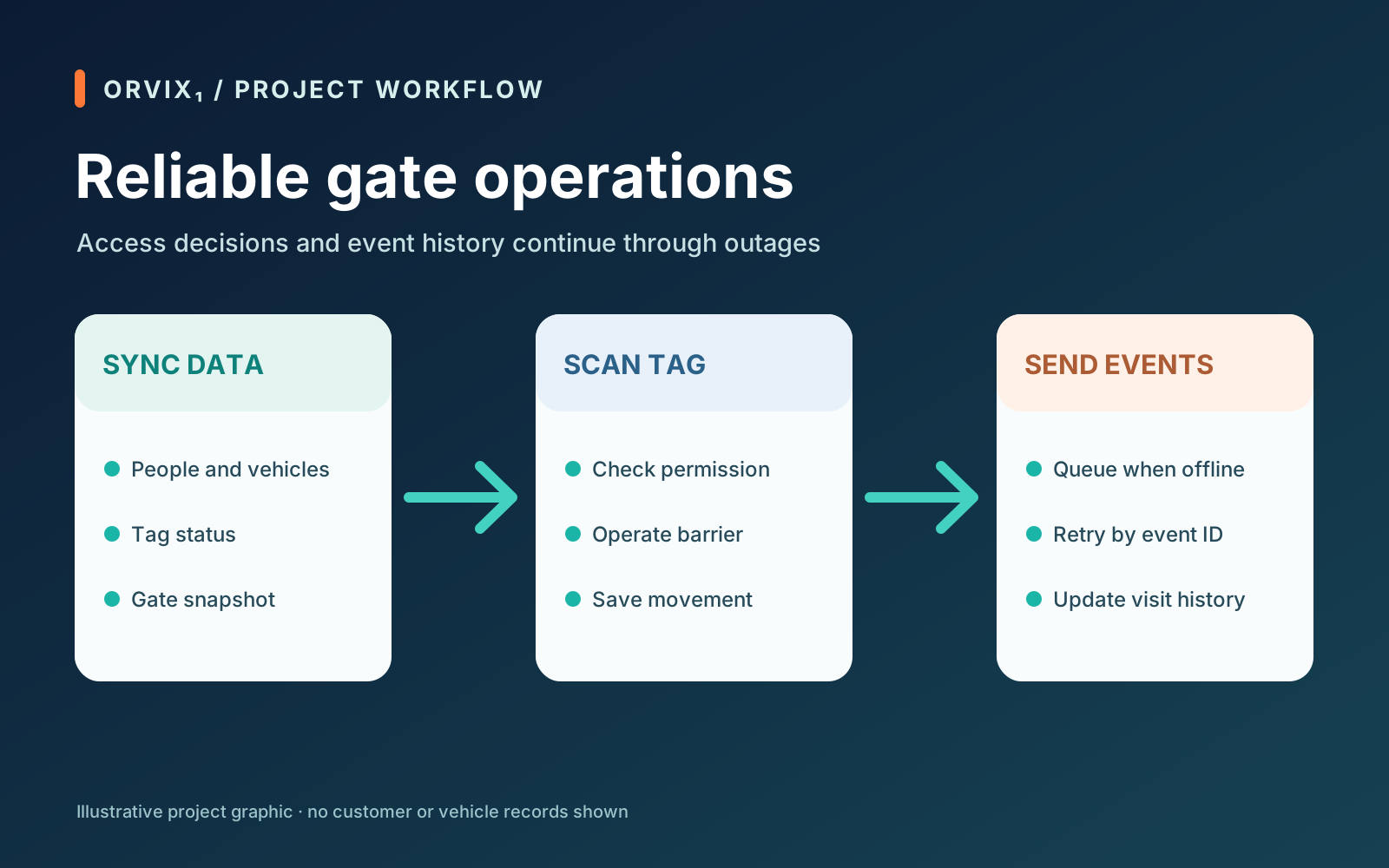
- Distribute access data. The management application synchronizes approved vehicle, tag, and status records to the gate service. Each gate keeps the information it needs for access decisions.
- Process a scan. The gate application reads the tag, checks the cached vehicle and access status, records an accepted or rejected action, and controls the barrier for authorized movements.
- Keep events through outages. The gate stores its events before sending them. Pending records are retried when connectivity returns, with unique event IDs preventing duplicate gate history.
- Review operations. Staff can inspect entry and exit activity, visit history, gate status, and reports from the management interface.
What we delivered
- Vehicle and owner management: connected records for registered people, vehicles, and their assigned tags.
- RFID tag administration: reader-assisted assignment, status checks, blocking and unblocking, and controlled replacement of a tag.
- Gate application: tag validation, barrier control, an operator activity view, and protected administrative settings.
- Offline continuity: a gate-side database that retains the access snapshot and queues unsent events until synchronization succeeds.
- Entry and exit history: gate events and visit records that can be searched and reviewed by the management team.
- Operational visibility: gate connection state, recent activity, synchronization status, and pending events.
- Roles and reporting: access levels for administrators and operators, with PDF and spreadsheet reporting in the management application.
Technology and delivery
The platform combines a Python and Flask management application, a Windows gate application, RFID readers, and a secure synchronization API. SQLite supports the management and gate-side records, while the hosted API uses PHP and MariaDB for controlled data exchange. Gate events carry unique IDs so retries after an outage do not create duplicate movements.
The Top City implementation brings registration, tag control, and gate activity into one system. It gives operators a practical way to manage access and gives administrators a clear history of vehicle movements and tag decisions.