
Project case study
About the project
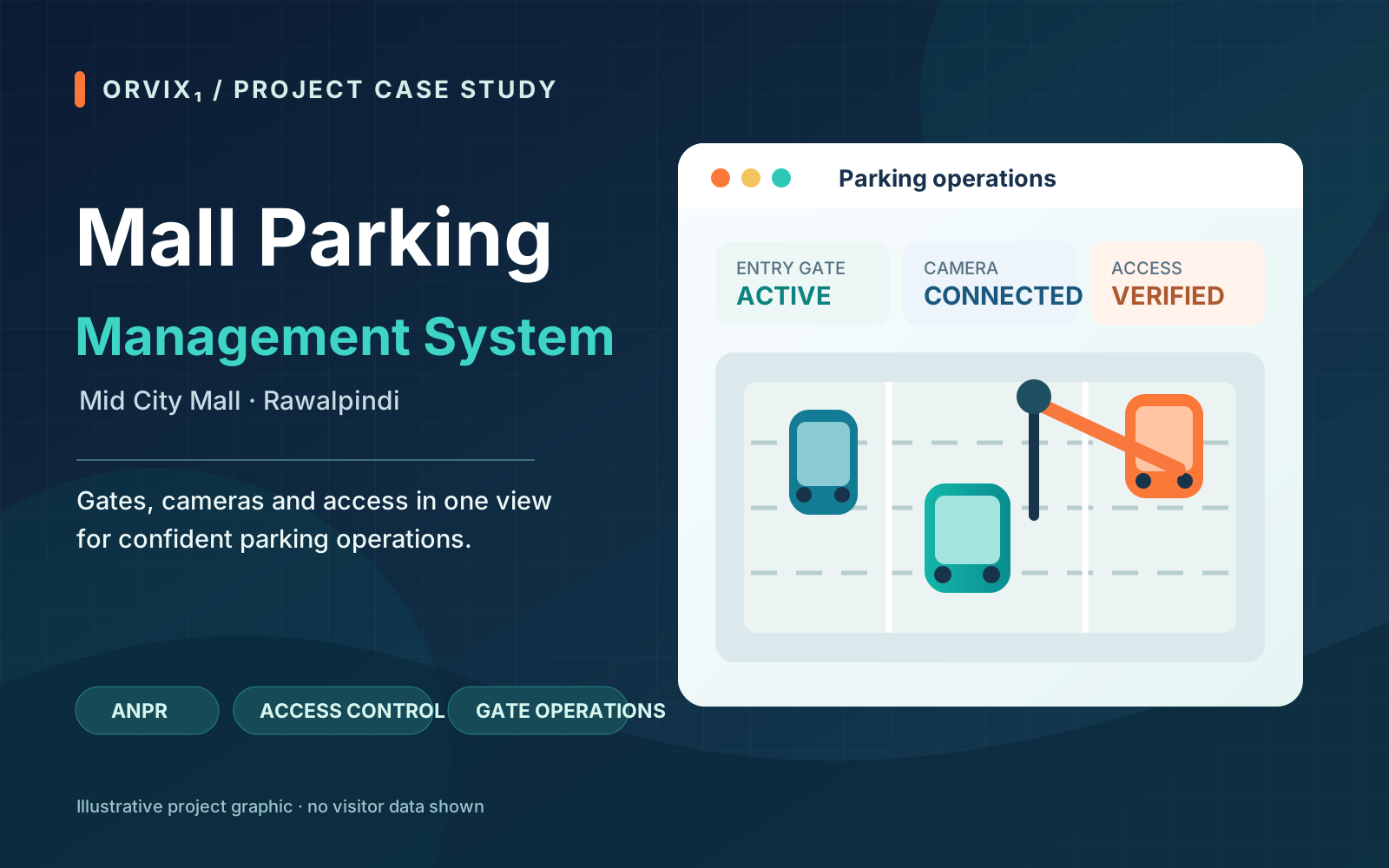
ORVIX₁ built and deployed a parking management system for Mid City Mall Rawalpindi. It connects vehicle and pedestrian access, gate controllers, cameras, identification workflows, and operator records in one operational platform. Staff work from a desktop control station and a secure browser interface, with different actions available to administrators and operators.
The project addresses more than opening a barrier. Each movement needs a clear direction, the right gate, a recorded identity or vehicle number, an access decision, and a history that staff can review later. The system brings those steps together while keeping authorized manual controls available when a human decision is needed.
The operational challenge
A busy mall has multiple entry and exit points, registered parking users, visitors, and pedestrian traffic. Camera captures and plate readings can be incomplete, access can expire, and a blocked vehicle or identity needs immediate attention. If gate actions, registrations, images, and reports live in separate places, operators lose the context needed to make timely decisions.
Mid City Mall needed a coordinated workflow that could check access rules at the gate, record what happened, and give authorized staff a practical way to review and manage the operation.
How the system works
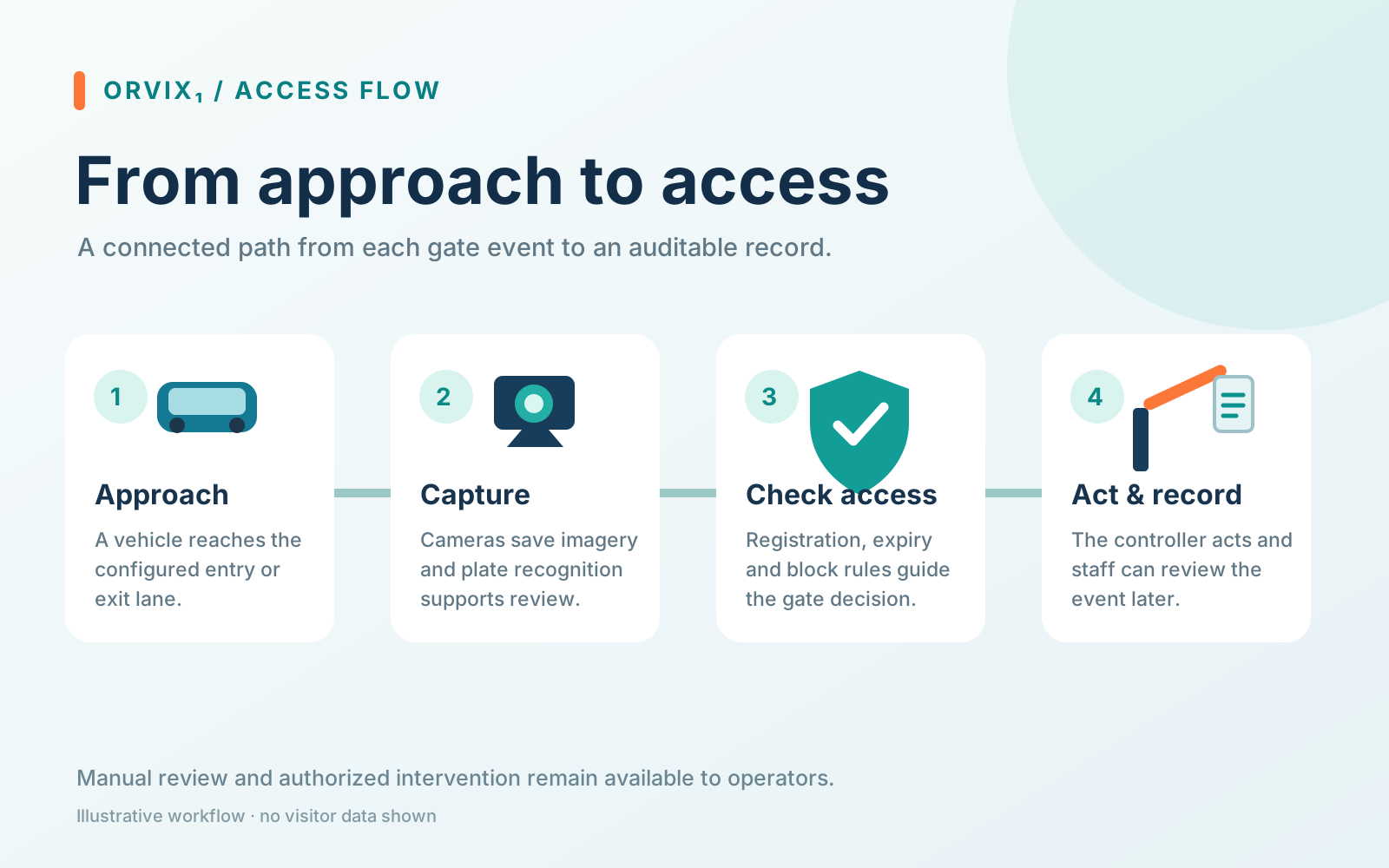
- Capture the approach. A configured camera captures the vehicle at an entry or exit lane. Plate recognition supports identification, and the event stays associated with the correct gate and direction.
- Check permission. Configured registration, parking access, expiry, and blocked-vehicle rules guide the gate decision. Cases that need attention remain visible to an operator.
- Control the gate. The application communicates with the gate controller for approved movements. Authorized staff also have manual entry and gate controls for exceptional situations.
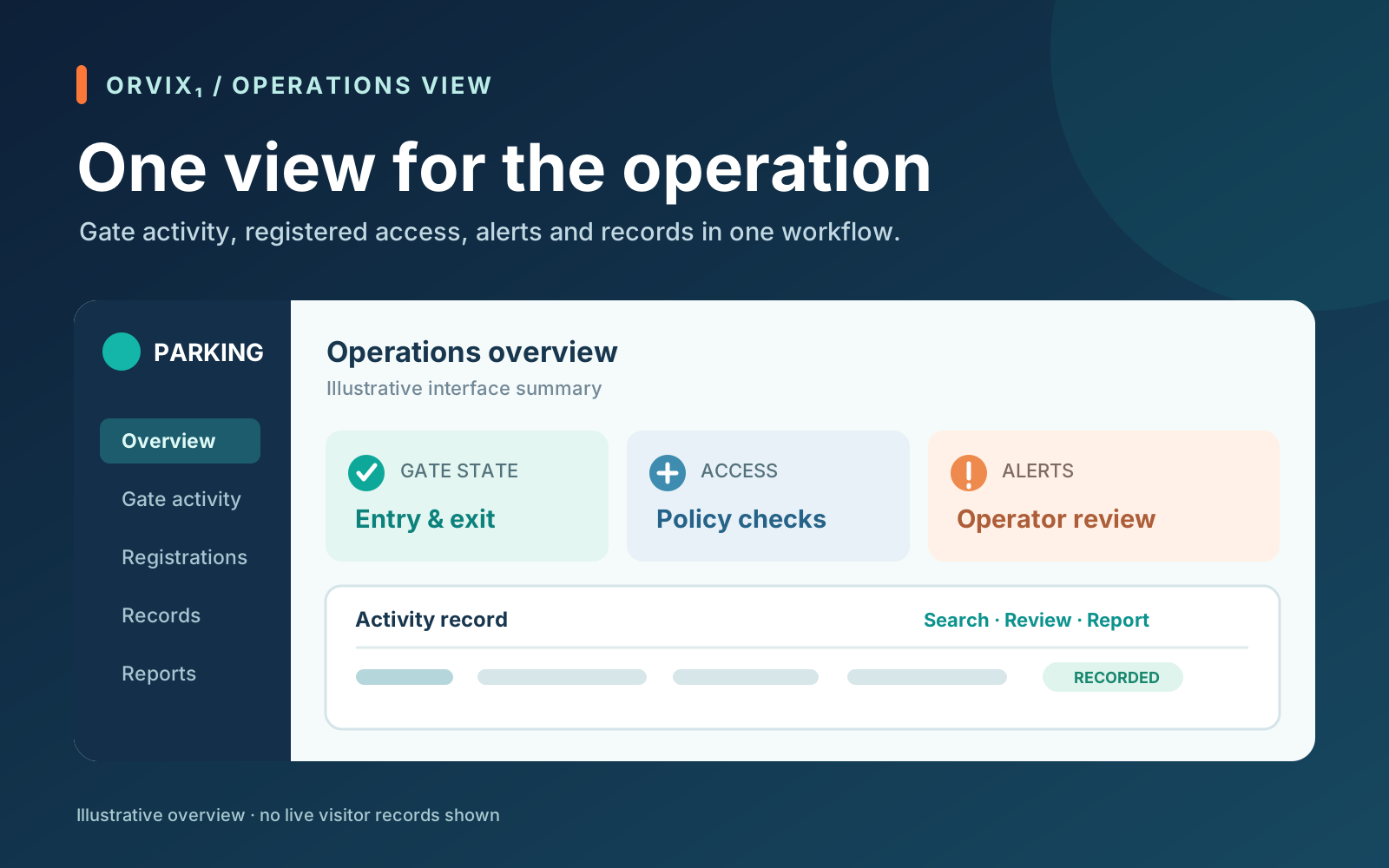
- Record and review. Entry and exit events, captured images, gate activity, and alerts become searchable records. Staff can inspect activity through the desktop and browser views and generate reports.
Pedestrian access has its own capture and identity workflow, including card or CNIC details and blocked-identity checks. This keeps the pedestrian path distinct from vehicle plate recognition while giving the operation a shared view of access activity.
What we delivered
- Gate and camera management: configurable entry and exit gates, camera assignments, controller status, and live operational feedback.
- Vehicle identification: camera capture and number plate recognition with image review when a reading needs operator attention.
- Registered parking access: a searchable vehicle and bike registry with monthly access rules, expiry management, exemptions, and access history.
- Pedestrian access: a dedicated identity capture flow with CNIC recognition and controlled review.
- Access protection: blocked-vehicle and blocked-identity checks, alerts, and permission-aware gate actions.
- Operator controls: role-based administration, manual vehicle entry, authorized gate commands, and clear status messages.
- Operational records: searchable entry and exit history with linked images and gate context.
- Reporting: browser-based views and PDF exports for operational and registration records.
Technology and delivery
The platform combines a Python and PySide6 desktop application with a secure browser interface. Camera and OCR services support vehicle plate and identity capture, while controller integration connects software decisions to physical gate actions. The data and image-storage layers are designed for ongoing operational use and review.
The completed system is deployed at Mid City Mall Rawalpindi and is running smoothly in day-to-day use. It gives the team a connected view of gate events, access status, alerts, and records while preserving a clear path for authorized human intervention.