Project case study
About the project
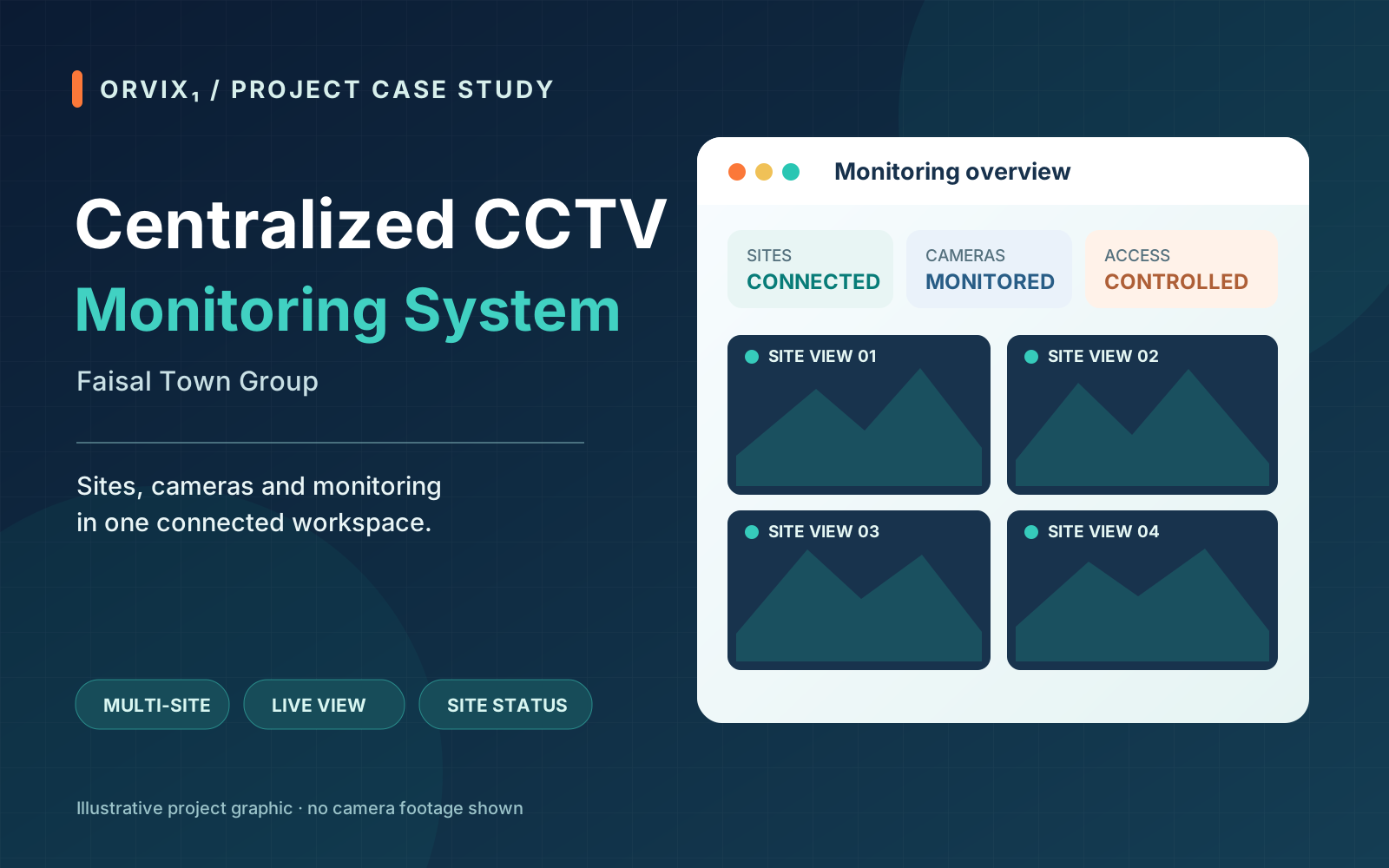
ORVIX₁ developed and deployed a centralized CCTV monitoring platform for Faisal Town Group. The system brings site, camera, and monitoring information into one web application so authorized teams can move from an overview of their assigned sites to the cameras that need attention. It is designed for multi-site operations, including Faisal Hill, Faisal Town, and Faisal Margala City.
Instead of treating every recorder as a separate interface, the platform connects site configuration, camera discovery, live viewing, health information, and activity history. The goal is to give a control-room operator a clear picture of what is available while keeping administration and viewing permissions under control.
The monitoring challenge
A distributed CCTV estate can include multiple sites, recorders, and many camera channels. Operators need to find the right feed quickly, identify a camera that is offline, and understand which site or location it belongs to. Administrators also need to manage who can see a site or individual camera. Maintaining those details separately makes day-to-day monitoring harder to coordinate.
The project therefore needed one interface for camera organization and viewing, with a practical way to connect different video sources and keep access tied to each user's responsibilities.
How the platform works
- Organize sites and cameras. Administrators configure sites and their locations, connect a supported video source, and keep camera records associated with the correct site.
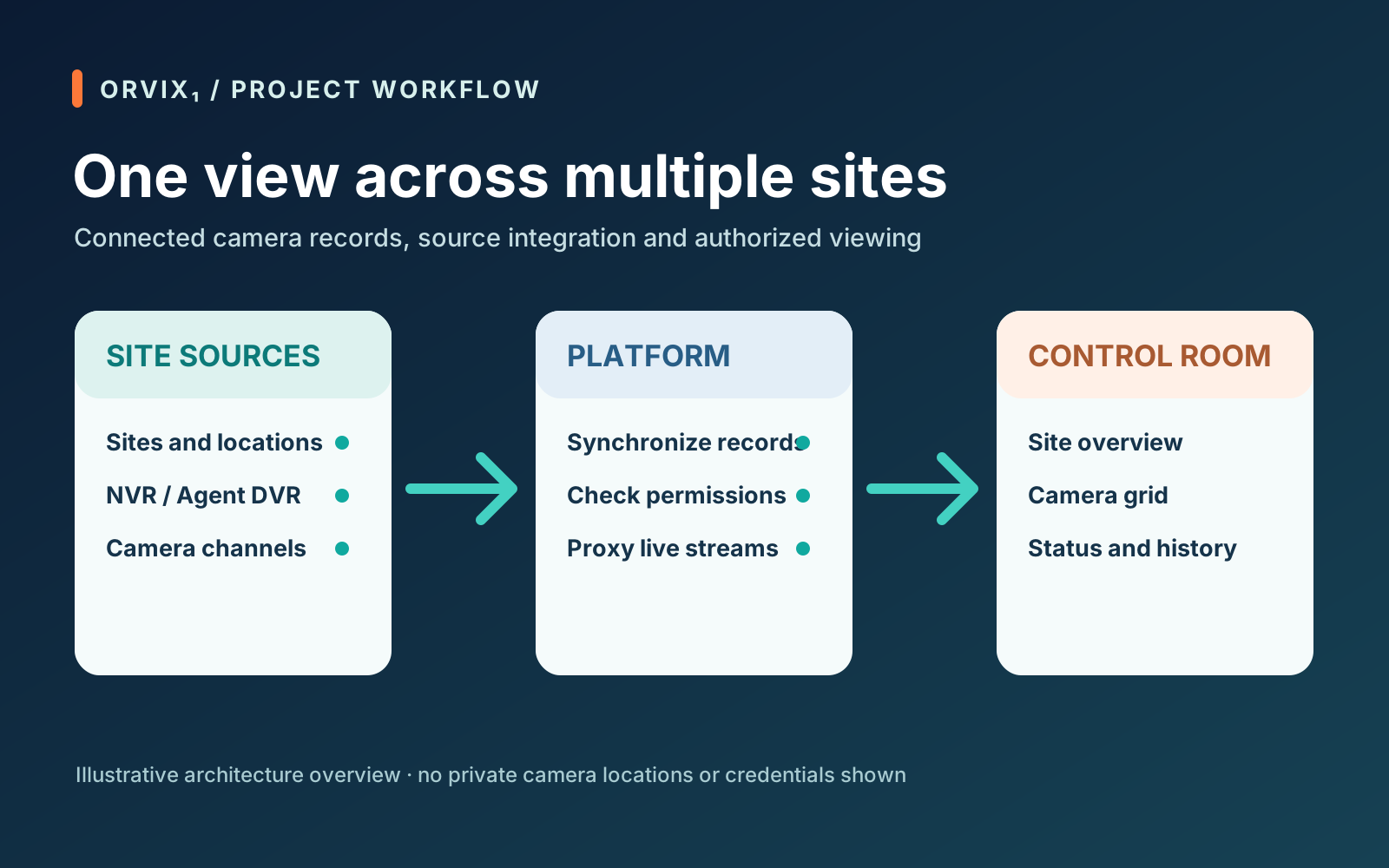
- Discover and synchronize. Camera synchronization imports available channels from a configured source. The Python Site Agent can identify channels across multiple NVRs while keeping each NVR and channel mapping distinct. Agent DVR is also supported.
- Monitor the estate. The dashboard summarizes accessible sites, servers, and camera status. Operators can search and filter cameras, switch between sites or locations, and use grid layouts or an enlarged view to inspect a feed.
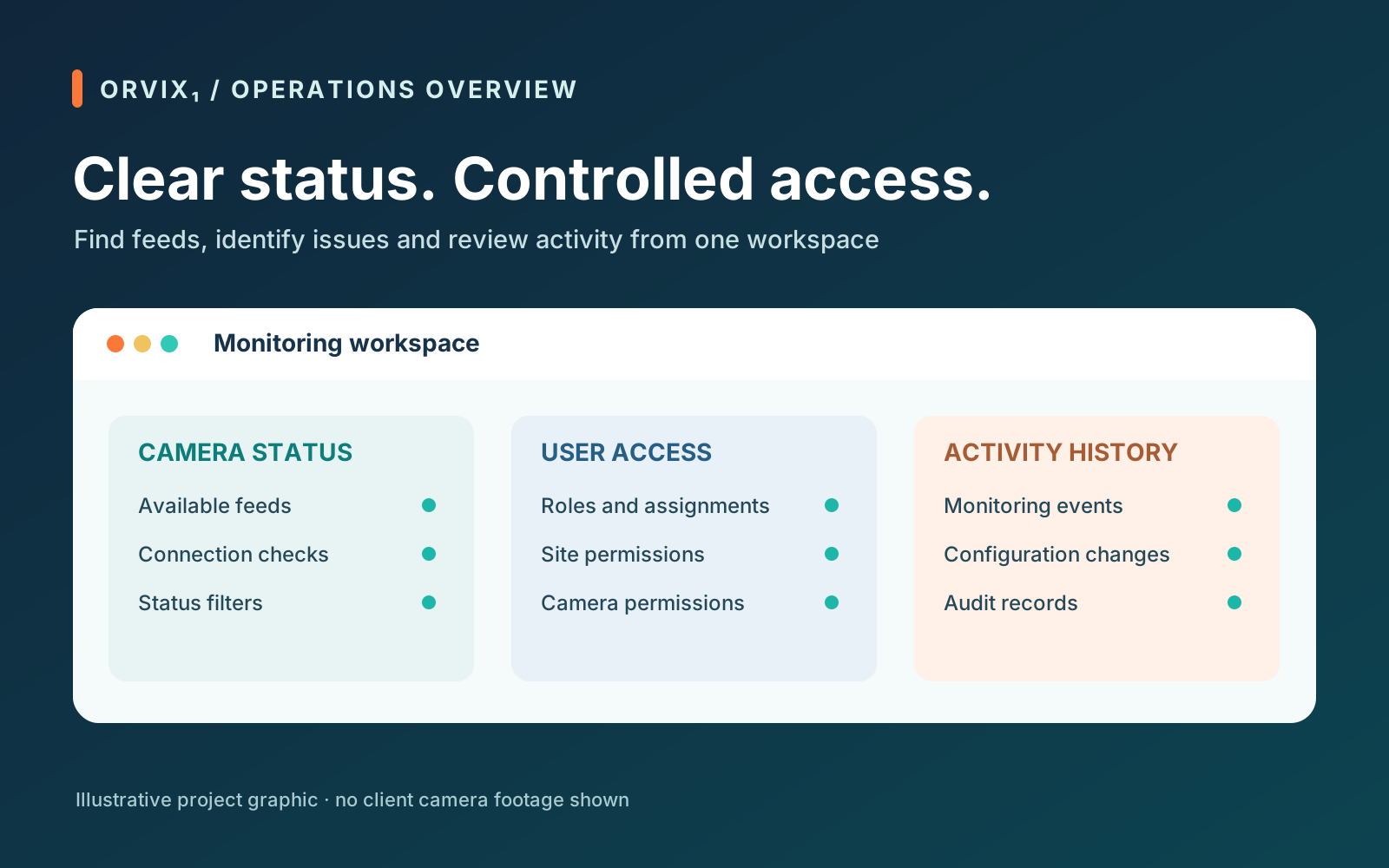
- Protect access. User roles and site- or camera-level assignments determine what a person can view or manage. Video requests pass through the web application, which checks camera permission before delivering media.
- Review activity. Health checks and monitoring history help staff identify connection issues. Audit records capture relevant configuration and viewing actions for later review.
Key capabilities
- Multi-site dashboard: a shared overview with site and camera status for the locations each user can access.
- Live camera workspace: searchable camera lists, status filters, flexible grids, and an expanded camera viewer.
- Source integration: support for Agent DVR and a Python Site Agent that discovers multiple NVRs and provides HLS streams.
- Camera synchronization: channel discovery and mapping without manually recreating every camera record.
- Site and location management: organized camera groups and site configuration for a distributed estate.
- Role-based access: administration, operator, and viewer roles with site- and camera-specific assignments.
- Health and history: server and camera status checks, monitoring events, and audit activity.
- Private media delivery: the application proxies supported streams so the browser does not receive recorder credentials or private source URLs.
Technology and approach
The web application uses Laravel, Vue, TypeScript, and Inertia. It integrates with Agent DVR and a separate Python Site Agent for camera discovery and video delivery. Supported live viewing uses MJPEG or HLS according to the configured source. The interface is built for desktop control-room work and adapts to smaller screens for access to the same monitoring information.
The system is live and working at the client side. It gives the team a coherent platform for managing sites, locating camera feeds, reviewing status, and controlling access. Its modular source integrations allow the monitoring workflow to accommodate different recorder environments without exposing their connection details to ordinary viewers.